
The Founder Files with Lauren Kennedy: On Building At The Intersection Of Fashion And Fraud
Welcome to The Founder Files, an inside look at the women building the next generation of category-defining companies. These conversations capture founders in moments of becoming. No polished retrospective or glossy highlights reel. This is where we catch ambitious women in motion: when the decisions are still hard, the outcomes still uncertain, and the lessons are still fresh enough to actually be useful.
Lauren Kennedy has spent her career at the intersection of two unlikely worlds: fashion and fraud. She built High End into one of Australia’s most trusted luxury resale communities, and then handed it over to new owners. Not because it wasn’t working, but because what she’d built inside it turned out to be worth far more than the marketplace itself.
VerityAI is the result: a computer vision API that returns a risk score on the physical product being sold, the missing layer in a global payments stack. Lauren is building the unglamorous but essential trust infrastructure for commerce itself, and just happens to be doing it while raising a newborn.
In this conversation, Lauren gets into what it actually cost her to walk away from a decade of community building, how she navigated a raise, a relocation, and a first pregnancy in the same six-month window, and why pressure (not comfort) is what makes her a better founder.
Q. Tell us about VerityAI in your own words. What are you building, and why does it need to exist?
“VerityAI is building the trust infrastructure for global commerce. Our product is called KYP (Know Your Product), and it's a computer vision API that sits in payment and commerce stacks alongside KYC (Know Your Customer) and KYB (Know Your Business).
When a transaction is about to happen, our model assesses the integrity of the physical product itself and returns a risk score. It's the missing piece.
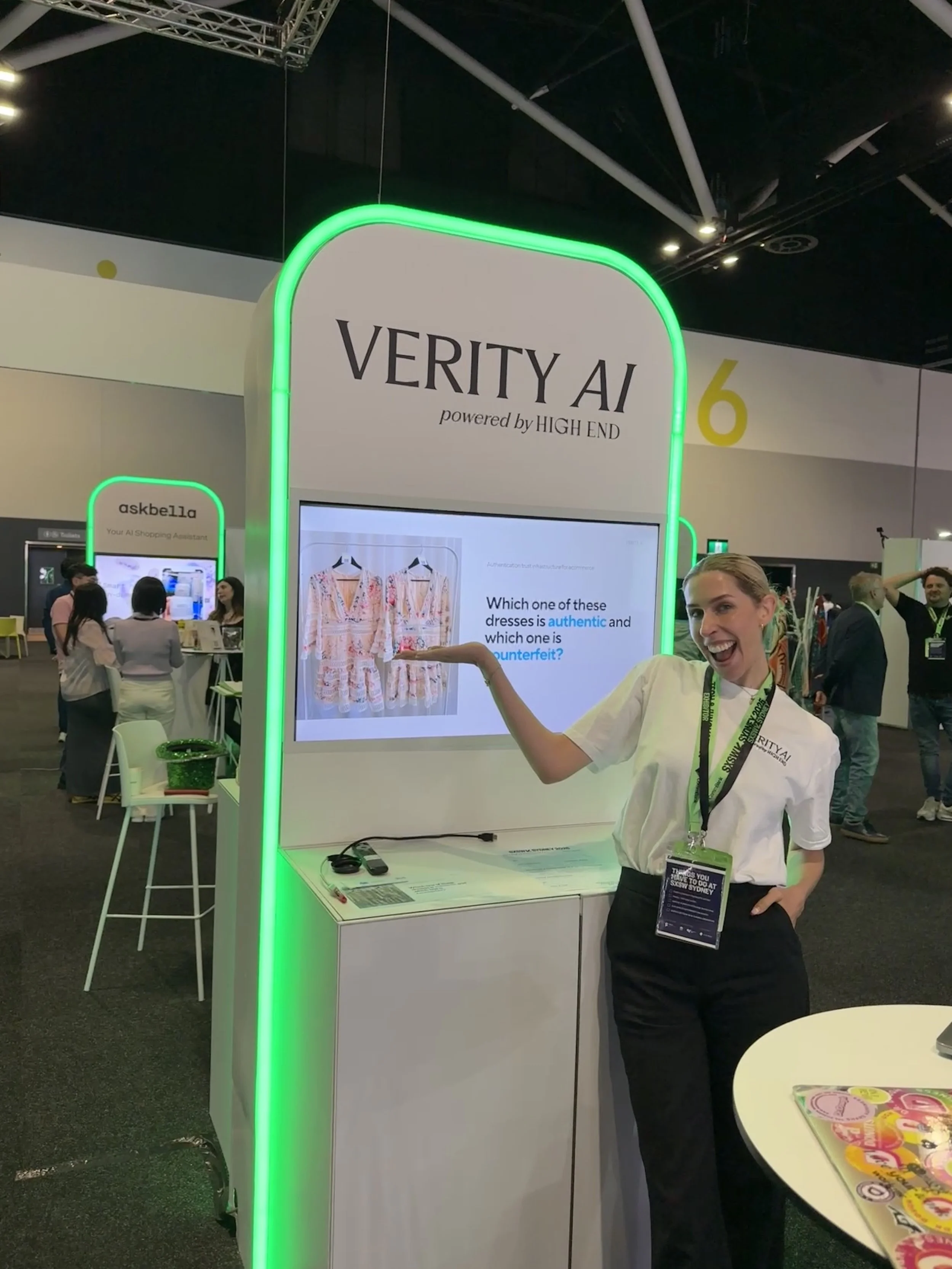
The reason it needs to exist is unglamorous but enormous: counterfeit and fraudulent products move through the global economy every single day, and the entire payments stack is built around verifying people and businesses, not the thing being sold.
Banks know who you are. Marketplaces know who their sellers are. Nobody can answer the hardest question: Is the product even real? We return a confidence score and let the platform act on it, as Visa does with a fraud signal.”
Q. What does building this business actually look like right now? What's consuming most of your energy this week?
“We're in the middle of developing the next version of VerityAI, so 50% of my day goes into coding (or using interfaces).
We typically design the solution, create a build plan, and then execute on the build. Our team is in the weeds on training data, edge cases, and inference latency every day. The product never sits still.
The other half is enterprise momentum; each of those conversations requires different framing, different internal stakeholder alignment, and different proof points. Whether you're pitching to a bank or a luxury resale marketplace, I spend hours researching to make sure that my pitch lands and actively helps the enterprise work toward its priority goals.
Outside of that, putting out fires! As a founder, you wear many hats, and it's critical that you understand everything from finance to product development.”
Q. What do you know about counterfeit fashion and resale fraud that most people, and most of the industry, are still sleeping on?
“Two things, and both of them keep me up at night.
The first is that the counterfeit problem is no longer a fashion problem. It's a payments problem, a marketplace problem, and, increasingly, a regulatory problem.
Counterfeits impact every category from fashion to technology (your Apple AirPods!). The OECD estimates global trade in counterfeits is worth nearly half a trillion dollars. Most of that is moving through legitimate-looking commerce platforms. The industry talks about it as a luxury handbag issue, but it's really a financial crime in disguise.
The second is that the resale industry has been quietly built on a fiction that authentication by a human expert is the standard. It isn't. It's slow, inconsistent, expensive, and impossible to scale. I know this because I ran a resale marketplace for years before VerityAI existed.
The dirty secret is that every major resale platform is operating with risk they can't fully see, and they know it. They just don't have a primitive to fix it yet.”
Q. What's the hardest call you've had to make so far, and would you make the same decision again?
“Pivoting the resale marketplace I co-founded, High End, to fully commit to VerityAI. We closed the marketplace operations in April this year after 3 years of building the app, 10+ years building it on Facebook as a group, a 150,000+ person community.

We realised quite quickly that VerityAI was too hard to ignore. High End gave us the training data, the product expertise, and the original wedge into the market. Our mission has always been to help the resale industry grow without increasing the counterfeit risk. Building VerityAI and KYP can be the infrastructure for thousands of marketplaces, like High End.
“You can't build infrastructure properly while also operating a customer facing marketplace that depends on it. Yes, I would make the same decision again; that's business.” — Lauren Kennedy
Q. Within a 6-month period, you moved interstate, rebuilt your team and closed a strategic raise - all while navigating your first pregnancy. What was going on in your head, and what does that period tell you about how you operate under pressure?
“Honestly, I don't think I noticed how much was happening until afterwards. I didn't let my brain get caught up in the pace.
There's a strange thing that happens in early-stage company building, where the only response to pressure is to keep moving, because pausing doesn't actually make any of it easier. You don't have a choice! If you stall, building a startup might not be the right path for you.
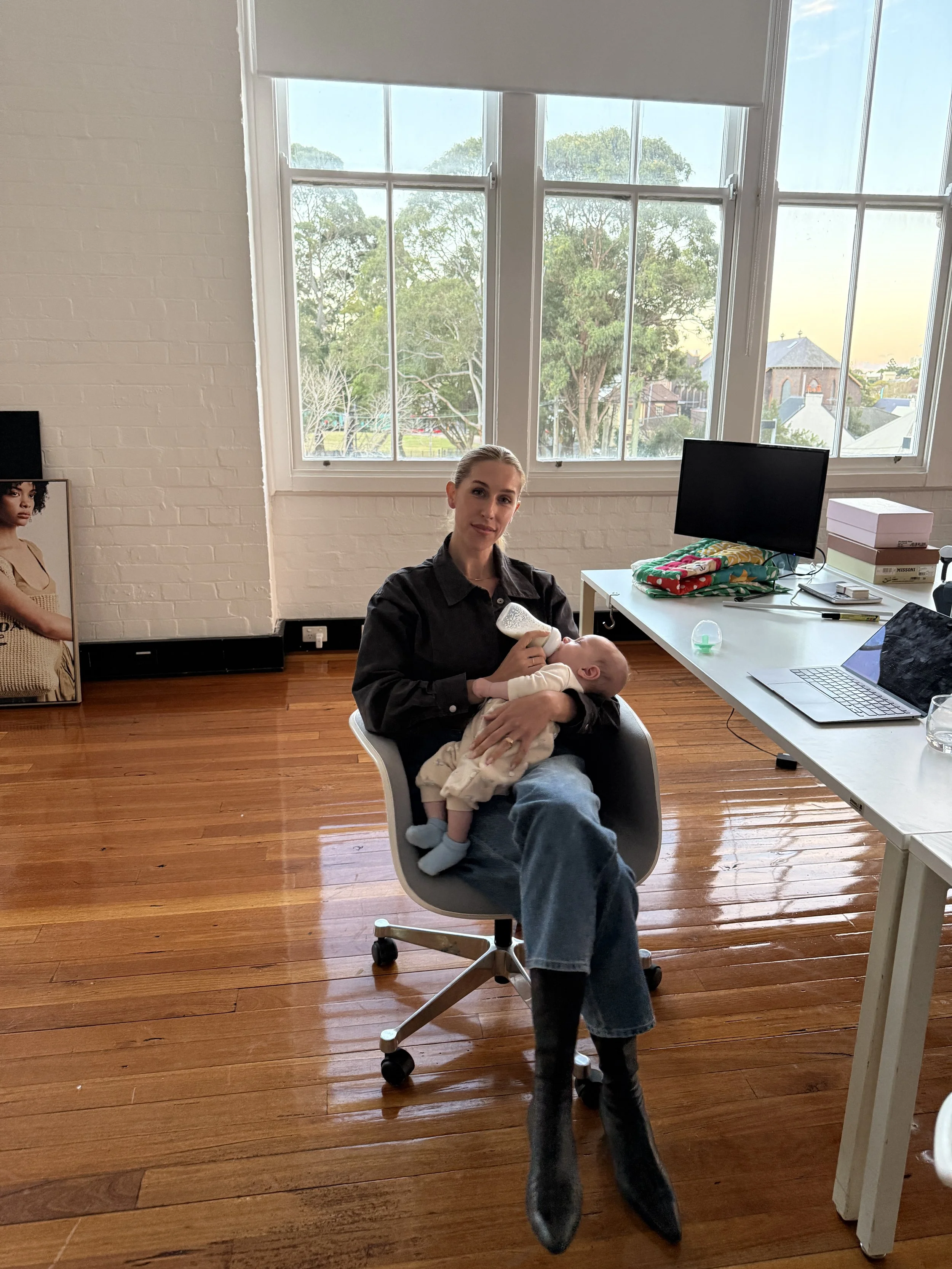
Being pregnant forced a new skill, which became incredibly valuable: ruthless prioritisation. When you genuinely cannot work a 70 hour week because a human life is relying on you, you stop pretending things are important when they aren't. You start asking different questions:
What's the one decision this week that, if I get it right, makes ten other decisions easier?
What is actually going to move the needle?
What am I spending too much time on that isn't delivering output?
“Comfortable conditions actually make me a worse founder. I like pressure; it forces you to reassess exactly what matters because there is no slack to spend on anything else.” — Lauren Kennedy
I also had an extraordinary support system, and I'd be lying if I pretended otherwise! Leaning on family to support me through those early months of motherhood is something I am forever grateful for. The myth that founders need to pause their personal lives in order to grow isn't true. There is never a 'right time' in life.”
Q. Verity sits at this interesting intersection of fashion, fraud analytics, and AI, three worlds that don't naturally talk to each other. How do you explain what you're building to someone who lives in only one of those worlds?
“Fashion: We give resale platforms and brands a way to assess whether a product is consistent with authentic characteristics, within 5 seconds.
Fraud: We're the product layer signal in your risk stack. You already have KYC for the buyer and KYB for the seller. We give you a risk score on the product itself.
AI: It's a computer vision model trained on years of structured marketplace data, labelled by experts, and validated against real transactions. The output is a calibrated probability, not a binary.”
Q. What's the one thing you wish someone had handed you at the start (a framework, a rule, a piece of advice) that you've had to figure out the hard way?
“Fail fast, and celebrate that failure. Your job as a founder, especially in the early days, is not to be right. You need to prove that you have velocity and cut through, especially today. The rate of change is greater than we've seen in decades.” — Lauren Kennedy
“I spent way too long trying to perfect the technical story (explaining the model, the architecture, and the data) when what enterprise buyers and investors actually need is a single, sharp analogy that lets them slot you into their mental model of the world.
For us, that's KYP next to KYC and KYB. The moment you realise that you need progress over process, conversations get dramatically shorter and decisions happen much faster.”
Want to follow VerityAI’s journey?
Lauren is building something that the global payments industry doesn't yet know it needs, and she's moving fast.
If you want to follow along as KYP becomes infrastructure, you can explore what they're building at VerityAI.app and follow Lauren's thinking as a founder on LinkedIn.